Multi-Step Process Art in Early Childhood Classrooms
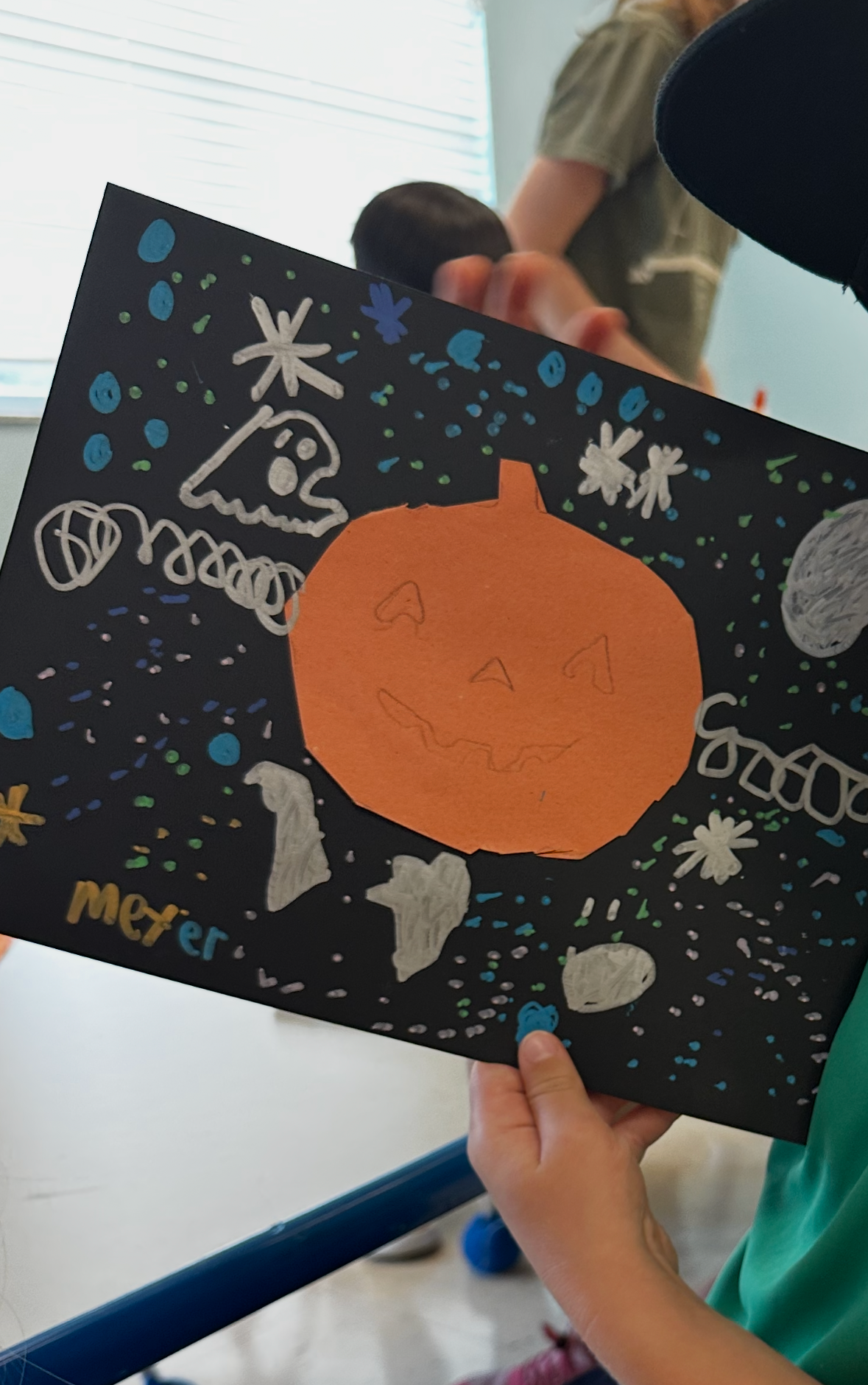
In our pre-K, kindergarten, and first grade art classes this week, students engaged in a multi-step process art project centered on creating nighttime pumpkin scenes. Process art invites young learners to focus on exploration, technique, and experimentation rather than solely on a rigid finished product. By structuring the experience across several sequential stages, our visual arts curriculum offers children meaningful practice in pacing their work, listening attentively, and following multi-part directions.
For children between the ages of four and seven, navigating a sequence of creative tasks supports executive functioning. When young learners move deliberately from one phase of an art project to the next, they build working memory, learn to plan spatial layouts on paper, and develop patience. Managing sequential tasks also strengthens cognitive flexibility, as students discover how early decisions establish the foundation for later creative choices.
Practicing Motor Skills Through Tracing, Cutting, and Gluing
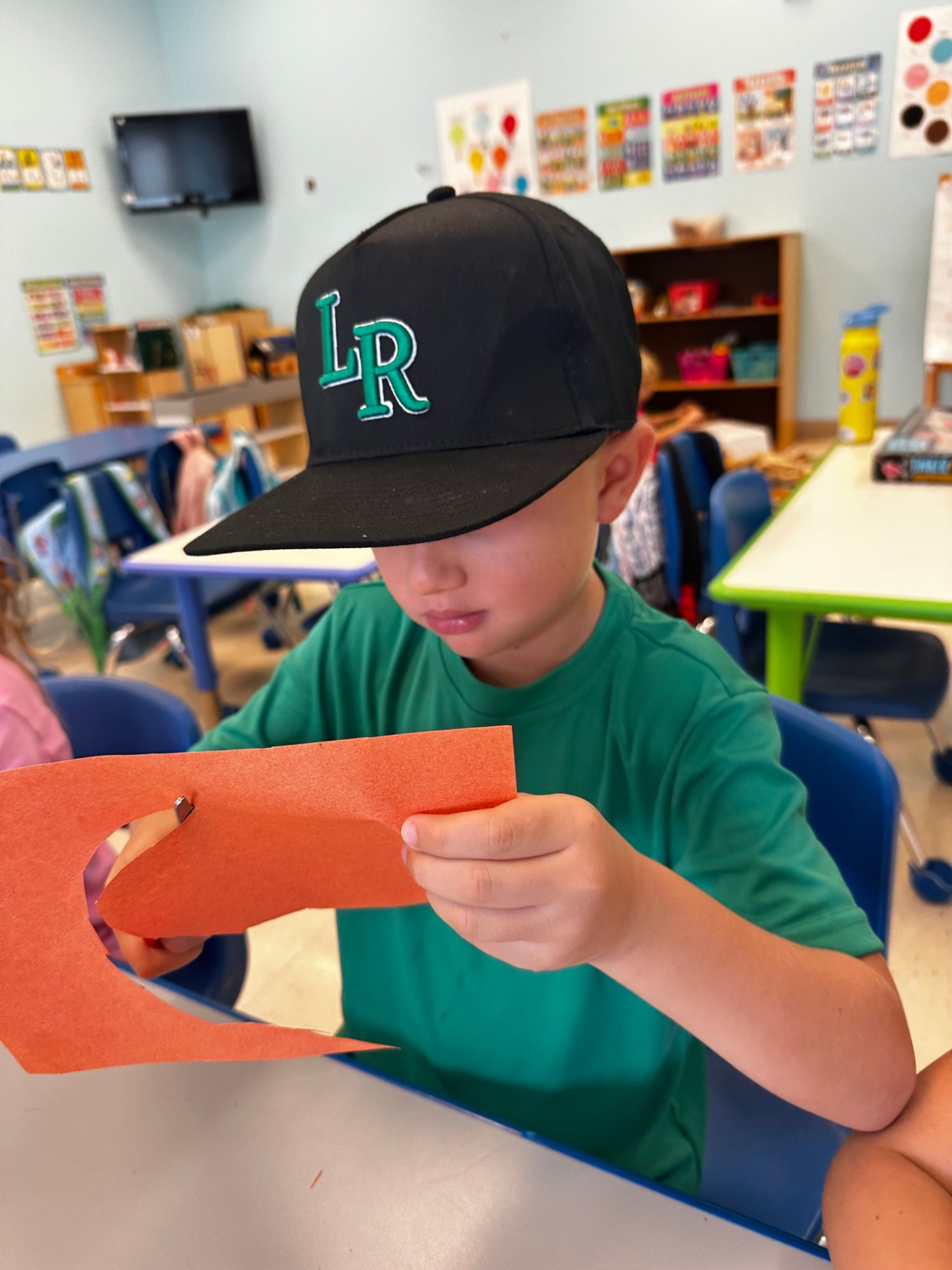
The nighttime pumpkin project integrated focused practice in both fine and gross motor coordination. Students practiced tracing shapes, carefully manipulating scissors for cutting, and applying glue to anchor their pieces. Each of these physical movements challenges the muscles of the hands, wrists, and arms in distinct and complementary ways.
Tracing offers practice in hand-eye coordination and spatial awareness, requiring children to stabilize a boundary while guiding a writing utensil around a contour. Cutting with scissors strengthens bilateral coordination, where one hand actively turns and stabilizes the paper while the dominant hand operates the blades. Controlled gluing further supports fine motor precision and grip control. At Mindful Leaders Academy, practicing these fundamental physical skills through creative art helps build hand endurance and dexterity that transfer across writing and daily classroom tasks.
Building Dimension with Yarn and Mixed Media
To elevate their compositions beyond flat paper collages, students incorporated yarn and other tactile elements to add dimension to their pumpkin scenes. Manipulating yarn requires delicate finger work, as flexible strands must be measured, positioned, and adhered intentionally across the surface.
Introducing dimensional materials allows young artists to explore texture and structural relief. Working with mixed media encourages children to consider how physical depth alters the appearance of an artwork. Families may notice at home that practicing with varied textures can spark curiosity about how different everyday materials feel, bend, and attach to one another.
Vibrant Contrast with Acrylic Art Markers on Black Paper
Students decorated their nighttime scenes using acrylic art markers directly on rich black paper. The learners loved seeing how the bright, opaque colors popped against the dark background, creating vivid contrast that highlighted their individual designs.
Working on dark paper offers a valuable shift in visual perspective. While children frequently draw on white surfaces, creating art on black paper demonstrates how color value and opacity interact with darker backgrounds. Using acrylic markers provides immediate visual feedback, reinforcing fine motor control as children observe how varying pressure and stroke thickness influence line quality.
Personal Expression, Name Writing, and Creative Choices
Alongside their artistic choices, a lot of the students practiced writing their names on their projects. Practicing name writing within an art context reinforces letter formation and ownership of creative work, allowing children to sign their finished pieces with intention.
Individual decision-making was central to the final aesthetic of each piece. Some students chose to add faces to their pumpkins to create jack-o'-lanterns, while others decided to keep them as pumpkins resting quietly under the night sky. The children were proud of their finished compositions, which came out wonderfully. Providing room for these distinct choices honors individual creativity while reinforcing self-confidence.
Families interested in seeing how process art and foundational skills are integrated into daily learning are welcome to book a tour of our classrooms.