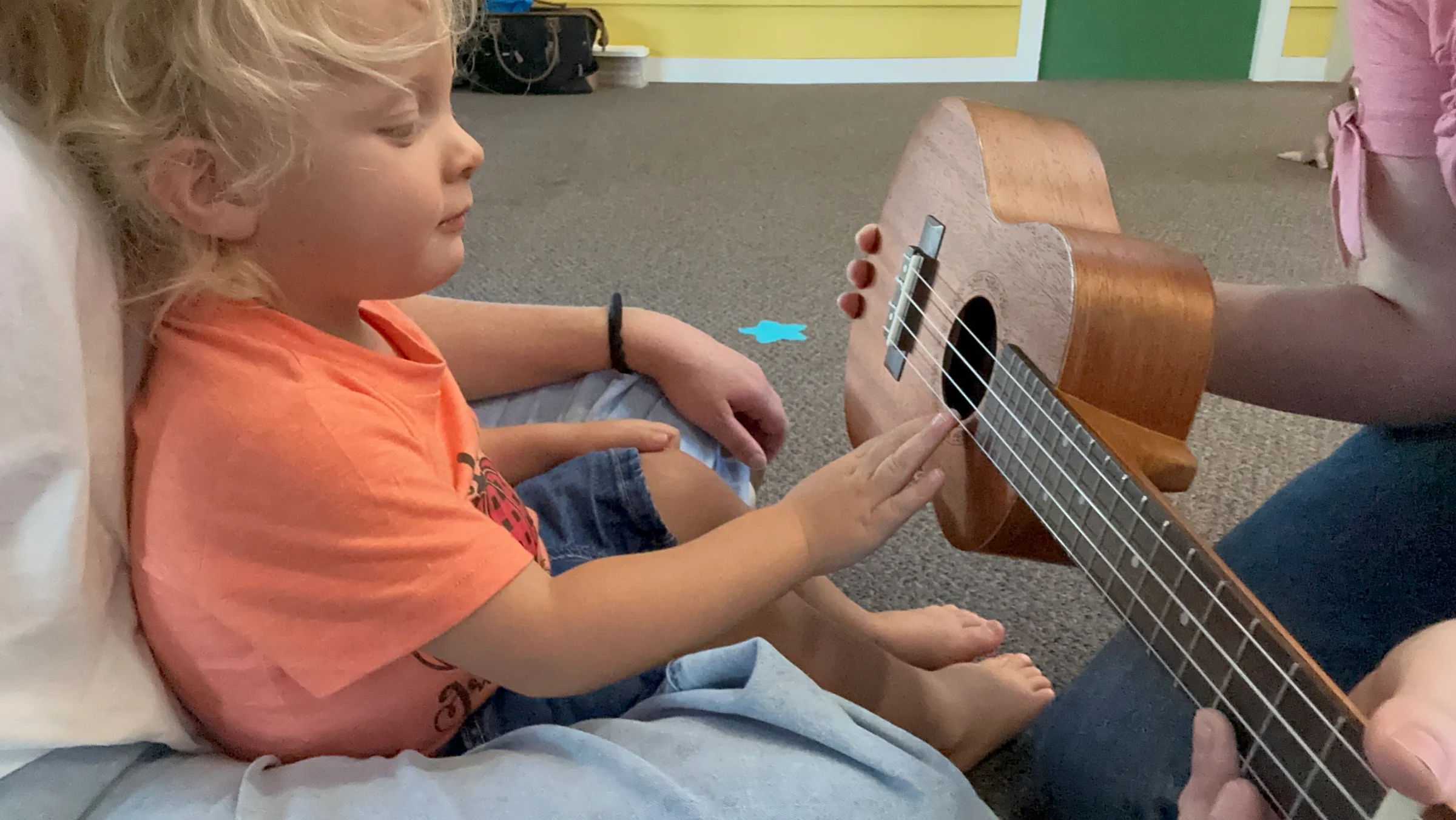
More Than a Fun Extra
When a child holds a ukulele for the first time, there's a lot to figure out. Where do the fingers go? How hard should you strum? How do you stay with the song when everyone else is playing too? It looks like a simple music lesson, and it is. It's also a workout for listening, memory, coordination, and teamwork.
The benefits of music for kids have been studied for decades, and the findings are more interesting, and more specific, than the headlines sometimes suggest.
Music Starts Before Lessons Do
Even babies respond to musical play. In a 2016 study at the University of Washington, researchers Christina Zhao and Patricia Kuhl invited 9-month-olds and their parents to 12 short play sessions over one month. In one group, parents and babies tapped along to the beat of children's songs. The other group played with toy cars and blocks instead. Afterward, brain scans showed that the music group responded more strongly to changes in rhythm, and not only in music. They responded more strongly to rhythm changes in speech, too.
That connection between rhythm and speech shows up again and again in the research.
Rhythm and Early Reading
Spoken language has its own rhythm. Syllables, words, and sentences come in patterns, and children who can hear those patterns clearly have an easier time learning to read.
In a 2014 study from Nina Kraus's lab at Northwestern University, researchers asked 3- and 4-year-olds to drum along with a beat. The children who could keep a steady beat did better on early reading skills, like hearing the separate sounds inside words, and their brains tracked speech sounds more precisely. The study shows a link, not a cause, but it helps explain why clapping games, rhymes, and steady drumming are such a big part of early childhood classrooms.
Why Sticking With It Matters
Learning an instrument takes time, and so do its effects. Kraus's lab also followed children ages 6 to 9 in the Harmony Project, a free community music program in Los Angeles. In results published in 2014, the children's brains got better at telling similar speech sounds apart after two years of music lessons, a skill tied to language and reading. After one year, the researchers didn't see that change yet. Kraus has said that making music can have a lasting effect on listening and learning when it's an ongoing part of a child's education.
Making Music Together
Music is also social. In a 2010 study, psychologists Sebastian Kirschner and Michael Tomasello paired up 4-year-olds to either sing, dance, and play simple percussion instruments together, or play a similar game with no music. Afterward, the children who had made music together were more likely to help a partner who needed it, and more likely to choose to work together on a task.
Group lessons ask children to listen to each other, wait their turn, and start and stop together. Those skills matter far beyond music class.
What Music Won't Do
It's worth being honest about the limits. When researchers Giovanni Sala and Fernand Gobet pooled the results of many studies in 2020, they found that once study quality was taken into account, the effect of music training on children's broader thinking and academic skills dropped to about zero. In other words, music lessons aren't a shortcut to higher test scores.
That doesn't make music less valuable. The strongest evidence points to the skills closest to music itself: careful listening, rhythm, and processing sound. Add the patience it takes to practice something hard and the joy of playing with other people, and that's plenty of reason to make music part of childhood.
Why the Ukulele Is a Great First Instrument
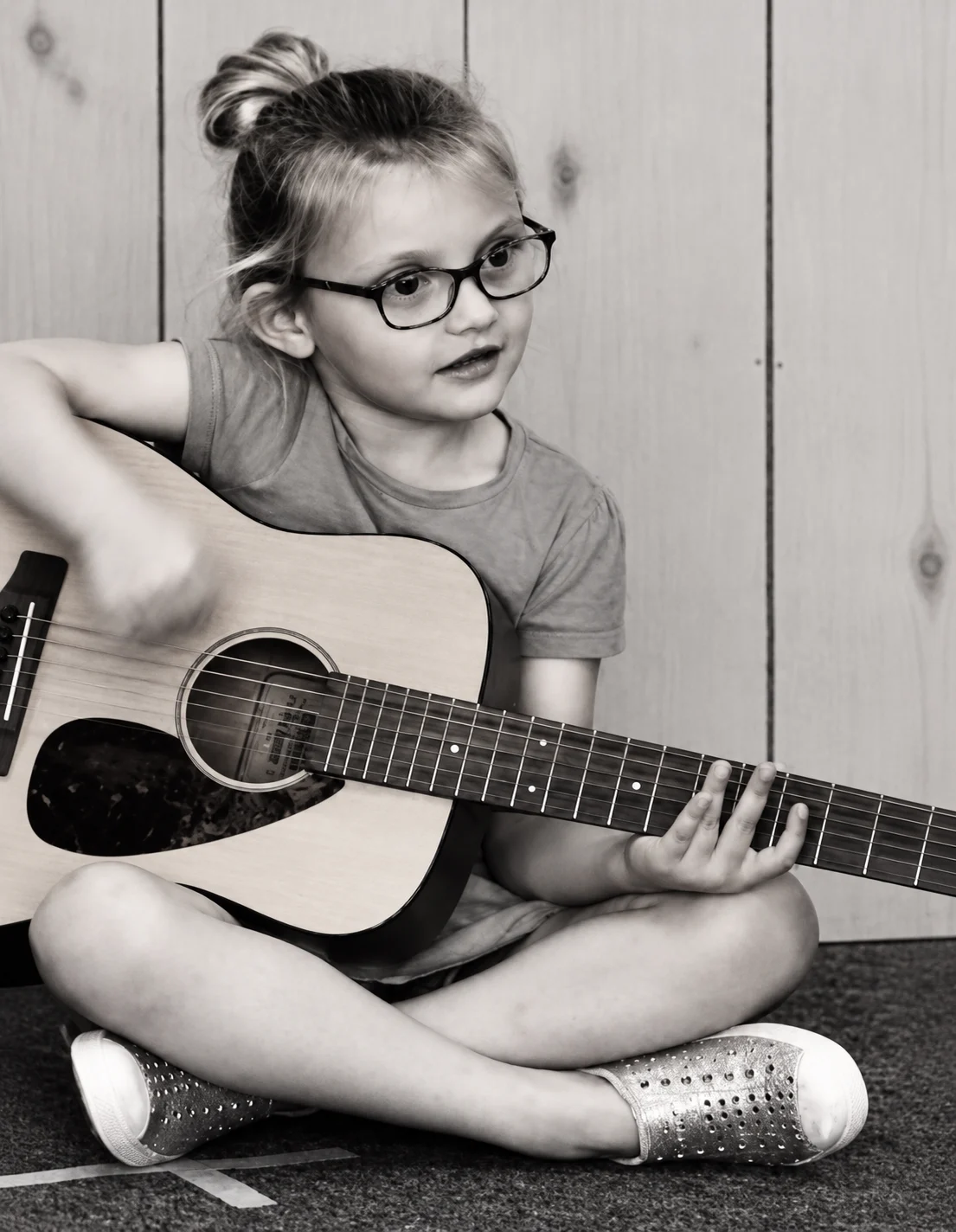
The ukulele has a fun history. It was developed in Hawaii in the 1880s from small, guitar-like instruments that Portuguese immigrants brought with them in 1879. Cabinet makers Manuel Nunes, José do Espírito Santo, and Augusto Dias are generally credited as the first ukulele makers. In Hawaiian, the name roughly translates to "jumping flea."
For young children, it's also a practical choice. A ukulele is small enough for little arms to hold, it has only four strings, and those strings are usually nylon, which is gentler on small fingertips than the steel strings on many guitars. Children can learn a few simple chords and play a real song fairly quickly, and that early success keeps them coming back.
Simple Ways to Bring Music Into Everyday Life
- Sing together in the car, at bath time, or while cleaning up.
- Clap, tap, or march to the beat of a favorite song.
- Clap out the syllables in each family member's name. It's an easy rhythm game and an early reading skill at the same time.
- Make a simple shaker by sealing dry rice inside a plastic container.
- Let children explore real instruments and make some noise before worrying about getting it right.
None of these require lessons or special equipment. What matters most is that children are making the music, not just listening to it.
Conclusion
Music gives young children something rare: a way to practice listening, patience, and teamwork while having fun. The research points to a simple idea. The benefits come from making music again and again, often alongside other people. Whether it's a first ukulele chord or a song sung off-key in the kitchen, every bit of it helps children tune in to the sounds and the people around them.
Discover more about our music curriculum and academy program.