Story Time as a Conversation
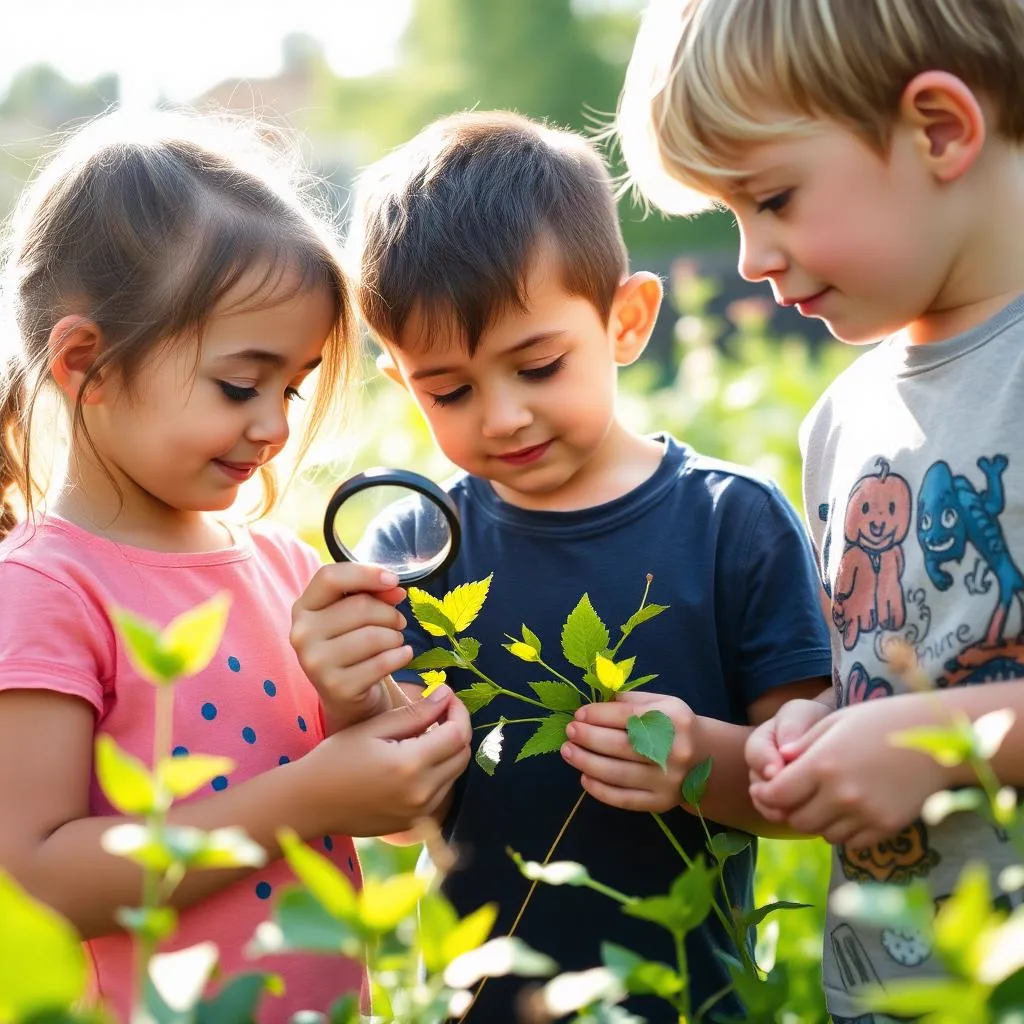
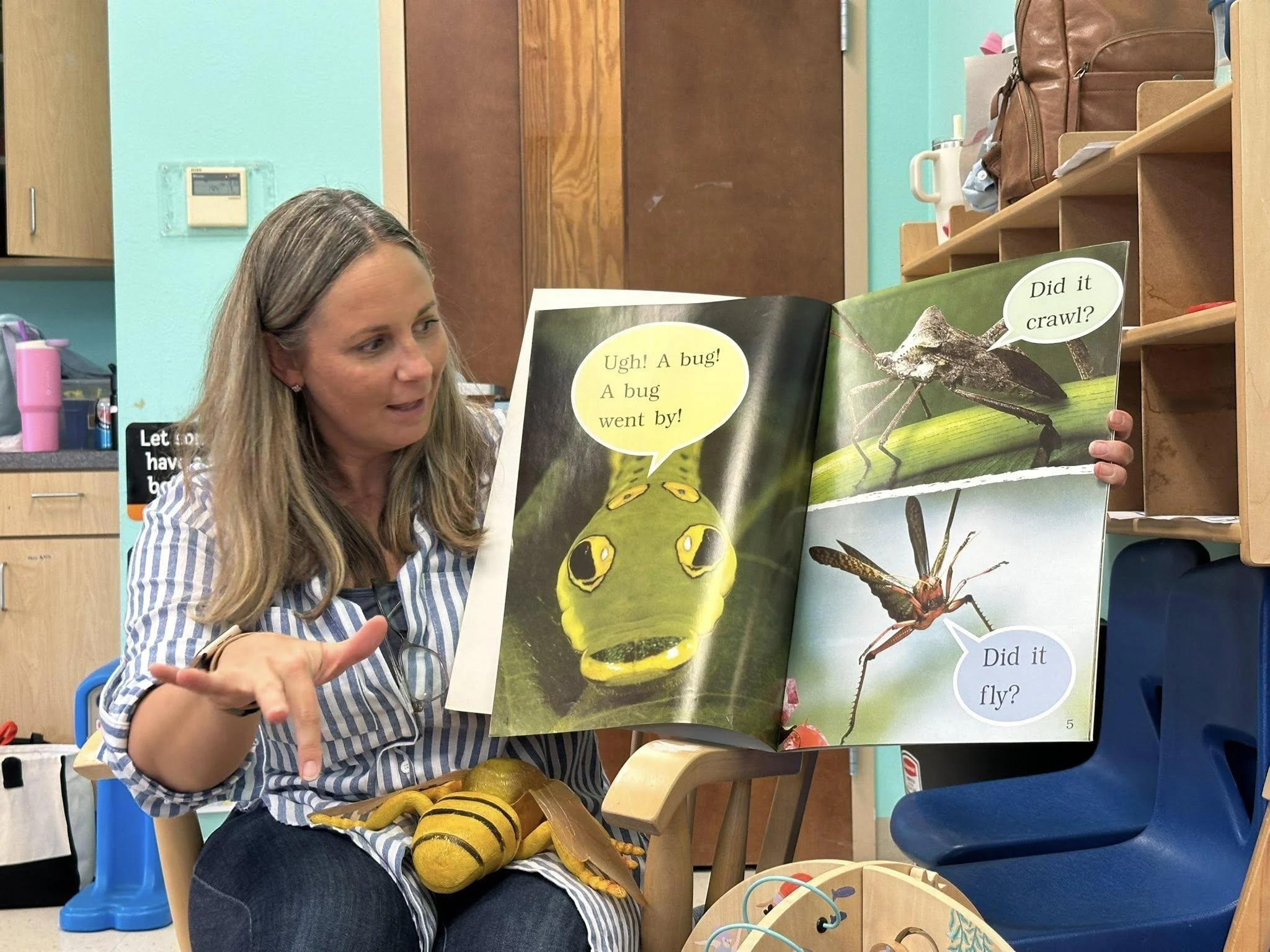
Picture a teacher holding up a book about bugs and pausing on a page. "Did it crawl? Did it fly?" Hands go up. Someone remembers a ladybug in the garden. Someone else is sure it was a bee. For a few minutes, the book isn't just being read to the children. They're reading it together.
That small shift, from listening to a story to talking about it, is one of the best-studied ideas in early literacy. Reading aloud to children matters a great deal. How we read with them matters, too.
Why Reading Aloud Matters So Much
In 2014, the American Academy of Pediatrics published a policy statement calling literacy promotion an essential part of pediatric care, beginning in infancy. It encourages pediatricians to tell parents that reading aloud with young children can enrich their time together, and it notes that conversations and play around books increase the back-and-forth between adult and child. In 2024, the AAP expanded that guidance, describing shared reading as a chance to build "loving, nurturing relationships during a critical time of brain development" and connecting it to attention, executive function, and school readiness.
The words add up, too. A 2019 study led by Jessica Logan at Ohio State University estimated that a child read one book a day hears nearly 300,000 words from books by kindergarten. A child read five books a day hears about 1.4 million. A child who is never read to hears fewer than 5,000. These are estimates based on typical book lengths, not word-for-word counts, but the gap is hard to ignore.
What Dialogic Reading Is
In 1988, psychologist Grover Whitehurst and his colleagues published a study showing that the way parents read to toddlers could change how quickly the children's language grew. Parents in the study learned to ask open-ended questions, build on what their child said, and gradually hand more of the storytelling over to the child. Those children showed faster growth in expressive language, meaning the words and sentences they could produce on their own, than children whose parents read the usual way.
This approach came to be called dialogic reading. The idea is simple. The adult becomes a listener and a questioner, and the child slowly becomes the storyteller.
Two Simple Tools: PEER and CROWD
Educators often teach dialogic reading with two easy-to-remember tools, described by the Victorian Department of Education and many others.
PEER is a short back-and-forth:
- Prompt the child to say something about the book.
- Evaluate the response.
- Expand on it by adding a word or a detail.
- Repeat the prompt so the child can try again with the new words.
If a child points and says, "Bug!" you might answer, "Yes, that's a beetle. A shiny green beetle. What kind of bug is it?"
CROWD describes five kinds of prompts:
- Completion. Leave off a word at the end of a line, especially in rhyming books, and let the child fill it in.
- Recall. Ask about something that already happened in the story. "Did it crawl? Did it fly?" is a perfect example.
- Open-ended. Ask what's happening in a picture.
- Wh- questions. Ask who, what, where, when, and why.
- Distancing. Connect the story to the child's own life. "Have you ever seen a bug like this outside?"
What the Evidence Shows
Dialogic reading has been studied many times since 1988. In 2007, the U.S. Department of Education's What Works Clearinghouse reviewed the research for preschool children and gave dialogic reading its highest rating, "positive effects," for oral language. The same review found no clear effect on phonological processing, the ability to hear the separate sounds in words. A 2010 review for children ages 3 to 6 with disabilities found potentially positive effects on communication and language, while noting that only a small number of studies qualified.
In other words, dialogic reading is especially good at building the language side of literacy: vocabulary, sentence building, and the confidence to talk about ideas. Children still need other experiences, like rhyming games and letter play, to build the sound side.
Why Questions Work
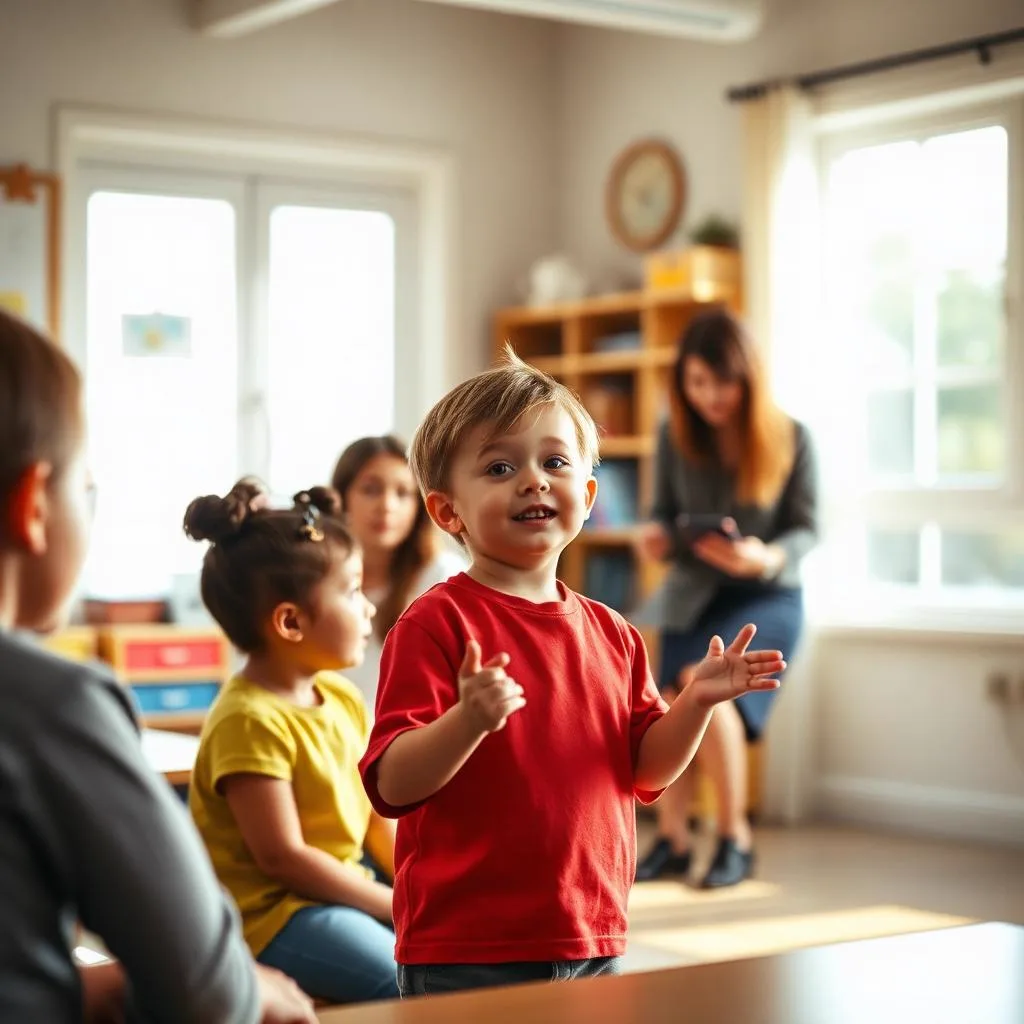
When children answer a question, they have to turn a thought into words. They practice new vocabulary in context, think about cause and effect, and connect what's on the page to what they already know. They also stay more engaged, because they're part of the story instead of an audience for it.
Keeping It Fun
Questions should feel like a conversation, not a quiz. A few things help:
- Start with books your child already knows. Familiar stories are easier to talk about.
- Ask one or two questions on a page, not ten.
- Follow your child's interest. If they want to linger on one picture, linger.
- Read some books straight through, too. Not every read-aloud needs to be interactive.
- Welcome every answer. The goal is talking, not getting it right.
Conclusion
Reading aloud is one of the simplest things we can do for young children, and one of the most powerful. Adding a few good questions turns that time into a conversation, one where children get to think, talk, and tell the story themselves. The book might be about bugs, trucks, or bedtime, but what children are really learning is that their words and ideas matter.
Discover more about our curriculum and academy program.